
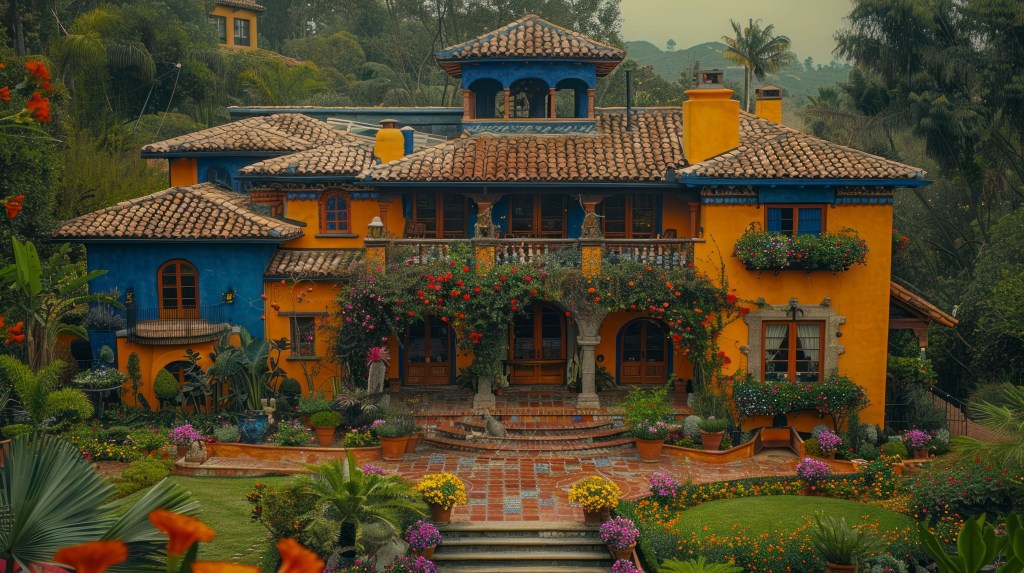
Summer vacations started, and my son insisted on visiting his uncle’s village. He finally went the day before yesterday. As I dropped him off at the station, my mind unknowingly wandered back to my own ancestral house, at my uncle’s village.
During our childhood, we would spend almost every summer and Diwali vacation at my uncle’s village. My uncle’s house and village were straight out of a storybook. The house was built in the traditional style with white clay and spread across about an acre or two.
When we reached the town, someone would inform the village, and one of the uncles would arrive with a bullock cart. A few conversations would take place on the ride, and as we neared the village, the village women would greet my mother, asking, “When did you arrive? Hope everything is well.”
At the entrance of the house was a massive door, large enough for an elephant to pass through. Then there was a huge courtyard, with a large neem tree in the middle—so big that even if two or three people joined hands, they wouldn’t be able to encircle it.
The main hall was special in that it stayed cool in the summer and warm in the winter. Next to it was a smaller door called the “Pakhal door” (Pakhal, a Marathi language word – a large leather bag used to carry water on a buffalo). Though the door had long fallen, that section was still referred to as “Pakhali’s door.”
Then there was the bathroom, which was as large as a two-bedroom house, with a corner for burning firewood and a large brass pot on the clay stove. For attending to nature’s calls, everyone had to go outside. Beyond this was a large stone for washing clothes, an open area, and then the granary. Attached to it were three or four rooms, a Tulsi (holy basil) altar, and the kitchen, which we all called “the cooking house.”
Further ahead was the cowshed, which housed about ten to twelve cows, five or six buffaloes, four or five pairs of bullocks, bullock carts, a small cart, plows, and various other farming tools.
My grandmother, grandfather, five uncles, their wives, each with at least three children, four aunts, and their eight to ten children made up a family of about 70-80 people. In such a large household, our mothers and aunts didn’t even keep track of where we were.
We’d fall, get hurt, fight, steal things from other people’s farms, get scolded, but overall, we had so much fun. There was always a unique rivalry with my uncle’s daughters, with quarrels like, “I won’t marry this annoying one” or “Who would marry this prickly one?” When we grew older, we stopped speaking as we would shy away from conversations. Now, they’ve gotten married and have children of their own. Now we do have conversations, but only occasionally.
I’ve gotten married too, responsibilities have piled up, and because of work, I can’t visit my uncle’s village as often. And even when I do, it’s just a quick visit, usually staying only for a night. My cousins have grown up, most of them work in farming, and some are still studying.
But a lot has changed over time. The property has been divided, the house has been broken into parts, and the old house is now unrecognizable. My uncles have grown old. Though the awe remains, there’s a feeling of something slipping away. My heart feels a little heavy. Everything has changed, but the neem tree still stands strong, holding on.
 Emotionsbyvijay.com
Leave a comment