
Then, if we want to get away from suffering, isn’t that also a kind of desire?
My son’s exams are nearing, and my wife asked me to help him with his History lessons.
One of the chapters was about the era of Chandragupta Maurya, along with some information about Buddha and his teachings.
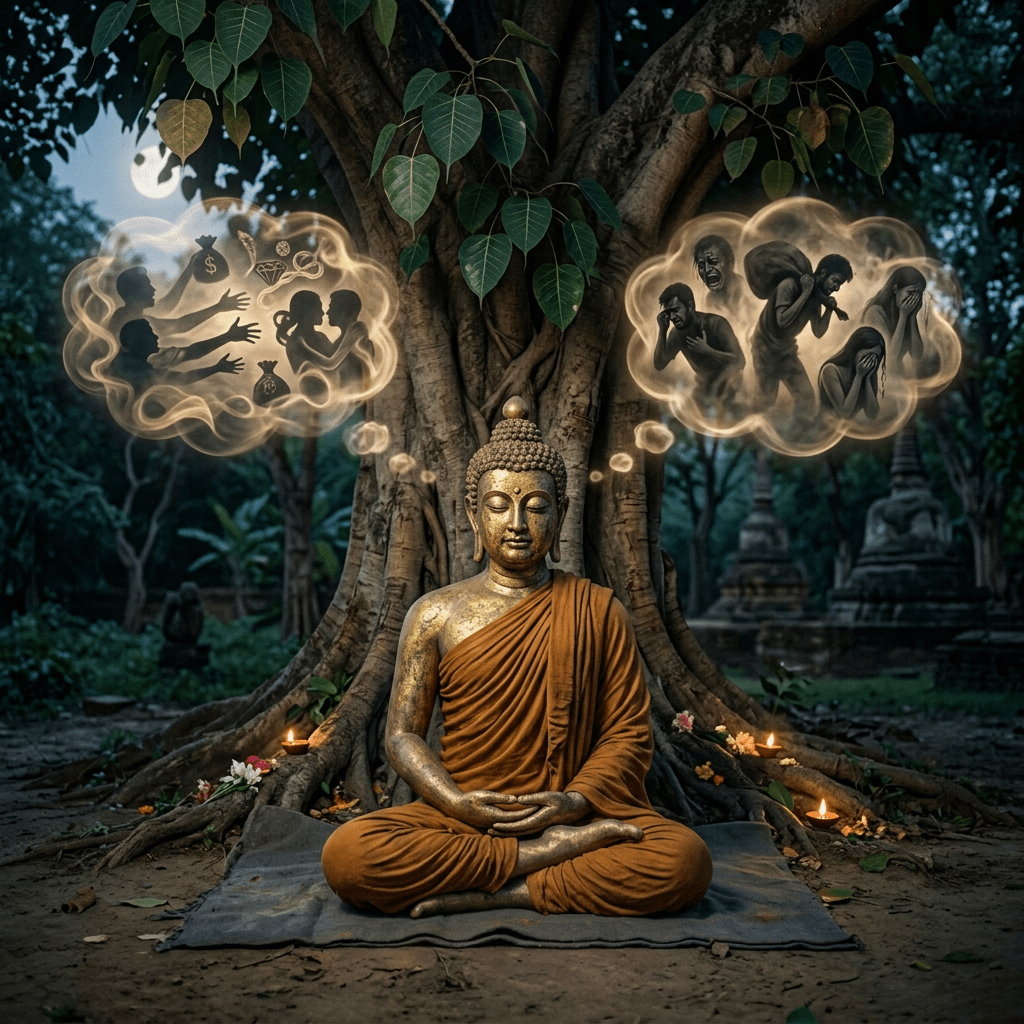
One teaching that caught my attention was the one mentioned in the title: “Desire is the cause of suffering.”
I am no one to question Buddha’s teachings, and I am certainly nowhere close to understanding the wisdom of such great thinkers. But while helping my son study, I couldn’t stop thinking about this.
Look at our daily lives.
We have expectations—from others and from ourselves. When those expectations are not met, we feel disappointed, frustrated, or hurt. In other words, we suffer.
Buddha, as the story goes, witnessed the hardships and suffering around him. He began searching for the reasons behind it. Eventually, he identified desire as one of the fundamental causes of suffering.
He then dedicated his life to understanding and teaching the path beyond suffering.
But here is where my confusion begins.
If I desire to get rid of suffering, isn’t that desire too?
If I say, “I don’t want to suffer anymore,” am I not still wanting something?
And if wanting something is desire, then am I not caught in the same cycle again?
Perhaps I am misunderstanding the teaching completely. Perhaps Buddha was pointing to something much deeper than simply “wanting” or “not wanting.”
But this thought has been bothering me ever since I read that chapter with my son.
Are we trying to escape desire… because we desire to escape suffering?
Dear readers, if you understand this better than I do, please enlighten me.
I would genuinely love to hear your perspective.




 Emotionsbyvijay.com
Leave a comment